
Article: What Makes Socks 'Non-Slip'? A Quick Guide to Grip Technology
What Makes Socks 'Non-Slip'? A Quick Guide to Grip Technology
"Non-slip" is one of those labels that shows up on a lot of sock and slipper packaging, but it's not always clear what it actually means, or whether it makes a real difference. Here's a straightforward look at how grip technology works and what's worth paying attention to when you're shopping.

The basic idea behind grip dots
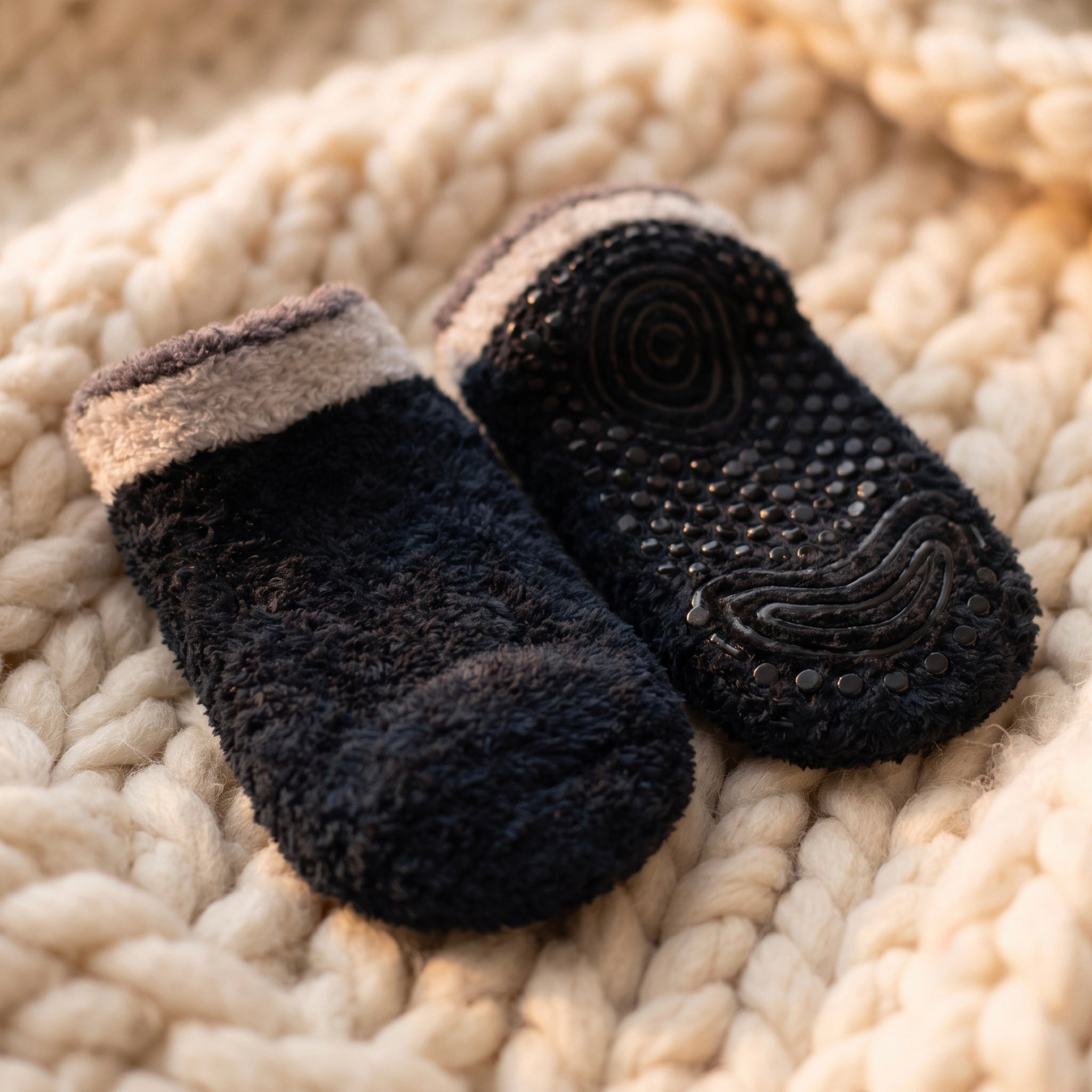
Most non-slip socks rely on small dots or lines of silicone or rubber-like material applied directly to the sole fabric. These raised dots create extra friction against smooth surfaces, hardwood, tile, laminate, that the sock fabric alone wouldn't provide. Regular sock material, even a thick, cushioned one, is still fairly smooth on the bottom and can slide easily on polished floors.
Why placement matters as much as material
Not all grip patterns are created equal. A few scattered dots only at the toe or heel leave a lot of the foot's contact area unprotected. A well-designed grip sole spreads coverage across the ball of the foot, the arch, and the heel, the three points that bear the most weight and shift the most during normal walking or standing. That fuller coverage is what actually prevents slipping during real movement, not just standing still.
Durability of the grip matters too
Not all grip dots are built to last. Lower-quality material can flatten, crack, or peel away from the fabric after repeated washing, at which point the "non-slip" feature stops doing much of anything. A well-made grip sole should hold its texture and adhesion through normal wash cycles, not just look grippy when it's brand new.
Grip vs. cushioning: they're not the same thing
It's a common mix-up: a thick, plush sole is comfortable, but comfort and grip are two different features. A sock can be extremely soft underfoot and still be slippery if it doesn't have actual traction elements built into the sole. If safety on hard floors is a priority, for young kids, older adults, or just anyone with hardwood throughout their home, check specifically for grip dots or a textured non-slip pattern, not just a thick, cushioned feel.
When grip actually matters most
Non-slip soles matter most in homes with hardwood, tile, or laminate flooring, especially in high-traffic areas like kitchens and hallways. If your home is fully carpeted, grip becomes less critical, though it still adds a small margin of stability on stairs or transition areas between rooms.
The takeaway
"Non-slip" isn't just marketing language, when it's done well, it's a specific, functional design feature: durable grip material, placed across the key pressure points of the foot, built to hold up over time. Knowing what to look for makes it a lot easier to tell a genuinely useful non-slip sock from one that's just borrowing the label.
Curious what real grip technology feels like? Shop our Fuzzy Grip Socks and see the difference a well-placed sole makes.

Leave a comment
This site is protected by hCaptcha and the hCaptcha Privacy Policy and Terms of Service apply.